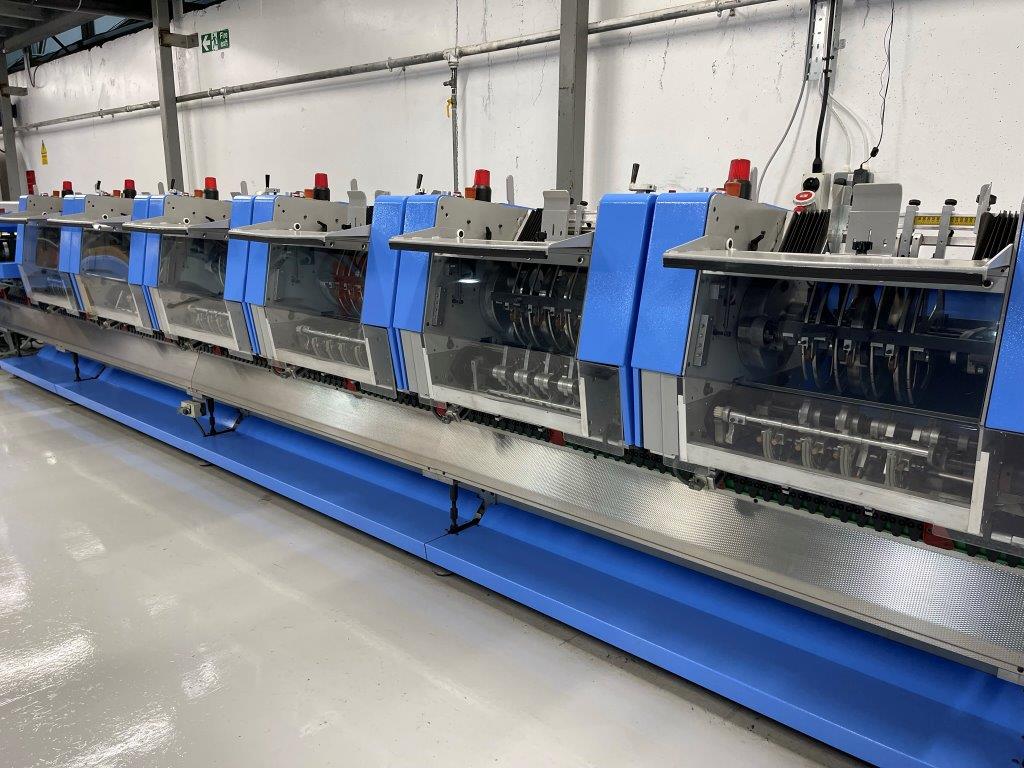
From the way we write and publish to the technologies behind mass production, the book industry has undergone significant change in recent years. Even in a digital-first world, printed books remain a vital part of publishing and print technology is evolving just as fast as readers expect. Below we explore the latest trends and innovations shaping the book industry today.
1. Shorter print runs, smarter equipment
The demand for smaller print runs has increased dramatically. Publishers are no longer printing thousands of copies at once. Instead, they are embracing shorter, more flexible runs to reduce overstock, minimize warehousing costs, and better respond to market demand. This shift requires smarter, faster, and more adaptable production lines, especially in offset printing and binding.
Modern offset presses and binding machines now offer features like quick setup times, digital job memory, and automated changeovers. These improvements allow for seamless transitions between different book formats, paper types, and binding styles. Additionally, short-run offset printing still delivers superior quality at competitive costs, making it an ideal solution for publishers managing diverse title portfolios.
2. Automation is the new standard
Labour shortages and rising operational costs are pushing printing companies to invest in automation. In the bindery, automated perfect binders, case makers, and trimming lines are streamlining workflows while improving consistency and quality. In offset printing, automatic plate loading, closed-loop color control, and remote diagnostics are becoming standard features.
Automation doesn’t just increase speed, it raises the overall reliability of the production process. Operators can now manage complex jobs with fewer manual interventions, reducing the risk of errors and enhancing throughput. This allows businesses to stay competitive, even when handling high-volume or multi-versioned jobs.
3. Sustainability in every step
Environmental responsibility is more upcoming than ever. Publishers, print buyers, and governments are all pushing for more sustainable production. Machinery manufacturers are responding with energy-efficient motors, waste-reducing technology, and compatibility with recycled materials and eco-friendly adhesives.
There’s also a growing appreciation for used equipment and machinery like ours as a sustainable investment. Extending the life cycle of a machine means less demand for raw materials and lower CO2 emissions. Printers are increasingly combining new and second-hand equipment to build flexible, green production lines that meet modern sustainability expectations without overextending budgets.
4. Personalization & hybrid print models
Books are no longer one-size-fits-all. Personalized covers, limited editions, and hybrid workflows that combine offset (for the inner pages) with digitally printed elements (like customized covers or inserts) are growing in popularity. This hybrid model allows publishers to balance the quality and economy of offset with the responsiveness of digital.
For printers, this means investing in machines that support both consistency and flexibility. Bindery solutions with adjustable formats, short changeover times, and memory storage are key to operating efficiently in this new landscape. The ability to add finishing touches, like foil stamping or embossing, also adds value to high-end editions or gift books.
5. Data-driven production planning
Real-time analytics and intelligent job tracking are becoming more common in book production facilities. Printers are using data to schedule jobs more efficiently, anticipate maintenance needs, and control material usage and energy consumption. This results in better decision-making, reduced downtime, and more predictable delivery schedules.
Modern machines that can integrate with ERP or MIS systems give operators and managers a complete overview of operations, from incoming orders to final dispatch. This level of insight is particularly useful when juggling a high volume of short-run or custom jobs.
Why used graphic machinery still matters in 2025
In the face of all these innovations, one thing remains clear: quality machinery is the foundation of a successful book production workflow. At Mekes, we specialize in sourcing, reconditioning, and supplying high-performance offset printing and binding machines that meet today’s standards for flexibility, automation, and sustainability.
Whether you’re a large-scale book manufacturer looking to expand your capabilities, a mid-size printer wanting to modernize with refurbished equipment, or a small business exploring cost-effective solutions, Mekes provides expert guidance and proven solutions. Our extensive portfolio includes trusted brands known for their durability, precision, and adaptability.
Additionally, our focus on used machines aligns with the industry’s sustainability goals. Every press or binder we supply not only offers cost savings but also reduces environmental impact. With decades of experience and a global network of partners, Mekes is committed to helping printers stay agile, efficient, and future-ready.
Want to know which solution fits your production needs best? Get in touch with us!